Monday, July 25, 2022

5 Tips for Supporting Beginning Readers


When children are young their parents begin to expose them to reading by sitting with them and reading to them. As children reach school age, or sometimes a little earlier, they are introduced to phonics and sight words. We know that all of this is important for teaching children to read, but sometimes it isn’t enough. Children sometimes need more exposure and practice time with the text. There are 5 tips that I would like to share with you, some of which I am sure you are already doing, but they are tips that I have used to help children learn to read and support struggling readers. 

Tip #1 - Use Repetitive Books  

Using repetitive books in the classroom is so much fun. I like using books like Brown Bear, Brown Bear; The Little Red Hen; The Gingerbread Man; and The Little Old Lady that Wasn’t Afraid of Anything. There are a lot more, but these are the ones that come to mind. Students enjoy listening to these types of stories, and as you read they easily catch on to the repetitive frames. While you are reading you will soon find that they are chanting the frame. This is nice, but the cool part is that later they will take that book and start reading, or pretend reading, using what they have learned. It doesn’t really matter if they aren’t actually reading all of the words. It is a way for them to build their confidence and get excited about reading. They also become more open to reading along with someone in order to focus more closely on the words they don’t know.

 
Tip #2 - Use Read Along Resources - Videos/Karaoke Songs

Another really fun way to teach reading is to use read-along videos or kids' karaoke videos. I put together a songbook with the lyrics that go with some kid karaoke songs that I found on YouTube. I like to give students a copy of the book and then have them use it as I play a few of the videos. Playing the videos during a Brain Break or as a cooldown after lunch is a perfect time for this. Students follow along in the book or, of course, they can just see the words displayed on the video.

The thing that makes the songbook such a great idea is that during free reading time students often choose their songbooks in which they are successfully able to read because they have been practicing the songs with the video.

There are a lot of kids' song videos on YouTube, but there are also read-along videos. It is nice to use these videos because usually, students are already familiar with the stories, plus they are short. Students learn the stories quickly and are soon able to read along on their own.


Tip #3 - Use Poems - Read and Color

I enjoy using poetry in the classroom, especially with units of study. Every student gets a copy of the poem, which usually has a black and white picture that can be colored. First, we read the poem together and then students partner read. After students have gone through the poem several times, the next step is to have them read the poem on their own. 

Once students have read through the poem, I have them color one part of the picture. They reread the poem and continue coloring in different parts of the picture each time. For struggling readers, I just have them focus on a small section of the poem. I find that they usually work hard to learn the whole poem. I like to have students keep the poems in a folder so that they are able to take the poems out and read them during independent reading time. 


Tip #4 - Book Bags - Easy/Appropriate Level
The key to becoming a reader is, of course, practice. I’ve already mentioned a few ways for students to practice reading, but book bags are another great idea. This works really well if you know your students’ reading levels. This allows you to provide them with books at their level to put in their book bags. Students do well with having familiar books in their bags that they can take home each night and practice reading. As they master each book, the book can be traded out for another one.

One reason for taking book bags home is that some students don't have books in their homes. I know that teachers spend way too much money on their classrooms, but having books for students to take home has always been one of my top priorities. One of the best places to find used books is in the bookstore at your local library. 


Tip #5 - Partner Share - Read a Poem, Book, Sentence, Etc. with a Partner

I probably don’t need to say much about this tip, because I’m sure you already know the benefits of students working with a partner, but I don’t want the importance of partner sharing in reading to be overlooked. I think in the past, or maybe even still, this has been referred to as buddy reading. Although buddy reading is often done with a young reader and an older reader. The idea of a partner share is that it pairs readers that are closer to the same level, but having one partner with a little more reading experience is helpful. 

Partner shares don’t need to be micromanaged. Often, they are not even planned. Find time in the schedule to allow students to read with a partner. This can be done during free reading time, which is nice, but it can also be done as part of your lesson. I’ve already mentioned doing this with the poems where after reading the poem as a whole class, students practice reading the poem with a partner. This helps to keep them accountable and together students can work on words that they may struggle with.

Partner share does not need to be made complicated. It could be as easy as providing a strip of paper, or a card for students to read together.

If you are doing some of the other things in your classroom such as repetitive reading, book bags, and song books then you will find that partner share becomes something that students will begin to do on their own.

As I mentioned, you don’t want to micromanage, but there are benefits to sometimes pairing up students. One reason might be to break up students that don’t stay on task when they work together. Another might be to help students become more social and allow them time to work with someone that they might not normally work with. The last reason I will mention, which I have mentioned earlier, is to provide support to struggling readers. There are two ways to do this. You could pair a stronger reader with one that needs support, or you could pair two struggling readers together. With two struggling readers the teacher can provide the needed support as appropriate. 

There are many ways to support reading in the classroom, but I have shared some of my favorite tips. The key for me is to make reading fun, but the goal is to set students up for success. In doing this you will help to foster their love of reading. 


Monday, July 11, 2022

Ideas and Resources for Teaching Capitalization and Punctuation


Teaching capitalization and punctuation to young learners is not always an easy task. They need daily practice in order to master these skills. Finding fun and effective teaching ideas can also be tricky. It is important for students to have daily, repetitive practice, which isn’t always easy to fit into the daily schedule. With this in mind, I thought I would share some ideas and resources that I like to use for teaching capitalization and punctuation.

One thing I try to do with teaching capitalization and punctuation is to fit practice time in during downtime. For example, when students walk in the door and are waiting for others to be seated and/or when they are waiting for attendance to be taken, basically during the morning routine. I do this by having a sentence on the board or using a printed booklet with one sentence to focus on.

Having a sentence on the board is easy to do. When students are ready, they can correctly write the sentence on a paper, or they can write the incorrectly given sentence and then use red and green crayons to show the errors. I have students underline capitalization errors in green and then write the capital/lowercase letter above the letter that has been used. Then I have them use red to show the punctuation error. They underline the punctuation error in red and then add the correct punctuation mark. 

I mentioned using a printed booklet. I like to use Phonics and Sight Words Based Spelling/Handwriting Books. This allows students to practice several skills. The first step is for student to hear and write a given sentence. Then they look at the book to see how they did. The booklet then allows students to trace the words and rewrite the sentence several times. While doing this they practice handwriting, spelling, capitalization, and punctuation. One sentence a day provides quick practice and by the end of the week students have completed their book. Students can be easily and quickly assessed on their learning. They are orally given all five sentences and asked to write them correctly. Teachers can monitor students’ progress with little effort. 


Phonics and Sight Word Based Spelling/Handwriting Sentence Books

For practice that is more lesson-based, I use a product that has actually become one of my best sellers. Students learn capitalization and punctuation rules with the teacher and then are able to practice the skills that they have learned. These pages work well for whole class instruction, small groups, and even homework. 

Capitalization and Punctuation Practice Pages

Using downtime in the classroom is a big thing for me. I like cool down times after recess or lunch. Students often need a minute to get back into learning mode. My favorite thing to do during this time is to show kid song videos in which students use their songbook to practice reading skills (they just think they are singing). But another thing I like to do is to show an educational video/PowerPoint such as one on capitalization and punctuation. You can find different videos on YouTube, but I have one that goes with the Capitalization and Punctuation Practice Packet that I shared above. This could be used before using the pages, after using them, as you go through the pages, or even on its own. You can watch this video on YouTube or purchase it in PowerPoint format. 

Capitalization and Punctuation PowerPoint

I am a big fan of making learning fun. I like students to learn in a way that seems more like play than work but that still allows them to practice and learn the skills that they need to master. Using a video or PowerPoint activity does this, but playing a game is one of my favorite ways of doing this. Unfortunately, capitalization and punctuation practice usually means taking the time to practice writing sentences. I like using my Capitalization and Punctuation - Choose the Correct Sentence Activity because the practice can be done both ways. This activity could easily be used as a game in which one person chooses the correct answer on a card and a partner checks the answer card to see if the answer is correct. This activity can also be used to record the answer by writing out the sentence correctly and then checking to see if the answer is correct. Either option works well for individual practice or working with a partner. There is also an Easel version of this activity that allows students to practice in a digital game format.

Capitalization and Punctuation - Choose the Correct Sentence

I of course like to have students practice capitalization and punctuation in many other ways, but these are just some quick ideas that I hope you find helpful. My overall message would be to make teaching capitalization and punctuation easy on yourself along with being fun and effective for your students.


Please feel free to visit and follow my TPT Store

Mrs. Navarre's TPT Store


Thursday, December 23, 2021

Handprint Christmas Wreath

My grandson made this Handprint Christmas Wreath at school. It is such a cute idea that I decided to share it with you. The picture was done on a 14x14 stretch canvas board. It could also be done on a flat panel board. This size might be a little difficult to find, but it is worth the search because it is the perfect size for a 6-year-old's handprint.

I’m not exactly sure what type of paint was used. My grandson, remember he’s only 6, said it was in a tube and washable. It sounds like it was acrylic paint. They used green for the handprints and red for the berries. My grandson tried to explain that they used a paintbrush with a circle at the end. I’m sure any circular form would work. I would probably use a sponge cut into a circle, or a cotton ball.

The bow looks like a ribbon that was tied into a bow and then hot glued on. I’m sure you could find pre-made bows if you wanted to save time and go for a fancier look.

I hope that you enjoy this craft idea as much as I do. 

If you are looking for another Christmas gift idea that students can make for their families, I have a couple that you might like. 

My go-to Christmas gift is a Poinsettia Vase. I usually try to buy the small vases during Thanksgiving break. If I'm lucky I can find them all in one shot, but sometimes I have to shop around. Michael's and Walmart are my best bet. 


The directions for this project are a Freebie on my TPT Store. I've included the link if you are interested. 


Occasionally, I have a parent helper that has already received the vase because I had a sibling in my class a previous year. When that happens I have to think of a new gift idea, but I love the poinsettias. My second option is a calendar. It is a really nice gift but takes more work. 


The directions for this project are also a Freebie. Again, I have provided the link for you. 


The fun and wonderful thing about student-made gifts are that they are always special no matter what the gift is. 

Enjoy and Merry Christmas!

Friday, March 26, 2021

Making Comparisons using Simple Passages and Venn Diagrams

As students begin to feel more confident with their reading, I like to provide them with different types of reading material. I think that this is a great way to challenge them and help them develop critical thinking. 

This Making Comparison packet is a good resource for changing things up a bit. Students read simple passages and then use a Venn Diagram to compare the similarities and differences between two topics. 

The topics in this packet are familiar to students, so they are able to learn new information and also use what they know to make comparisons. 

The packet includes 10 passage pages with corresponding Venn Diagram pages. The passages provide students with nonfiction text, which is important for them to be exposed to. The comparisons in the passages are made between: dogs and cats; apples and oranges; cars and bikes; football and basketball; bees and butterflies; pizza and spaghetti; bats and birds; winter and summer; oceans and lakes; and penguins and polar bears.  

Here is a preview of the Dogs and Cats text and Venn Diagram:


How I Use: I provide students with one of the comparison passage pages. Then we read it together. This provides students with reading support if needed. It also allows me to clarify the facts and/or unknown words. After we have read the passage together, I have students read it on their own, or with a partner. I like to have students highlight keywords, or important facts during this time. Once students have finished reading I have them work on the Venn Diagram. 

Using these passages is a fun way to get students reading. They enjoy the familiar topics and are able to use their background knowledge. They are also able to share other things that they know about the topic. 

This packet is available at my TPT Store if you are interested. 
Here is the link: 


Monday, March 22, 2021

Easter Egg Number Word Match


It's Easter time again. I love using holiday-themed activities in the classroom. It is important to me that they are educational, not just fun. This Easter Egg Number Word Match is an interactive activity that works well as a small group activity. Students can work with a partner, or on their own. They practice reading the number word and then find the matching number.

I like to use this resource as a file folder activity, but you could always have students simply match the number and word cards. 

There are 21 matching cards, which include the numbers 0-20. 


There is a reference page that students can use as they learn the number words. 


There is also a couple of labels for the file folder. 


This packet can be purchased from my TPT Store. 
Easter Egg Number Word Match

I also have an Easter Basket Adjective Egg Hunt Freebie.


Thursday, February 25, 2021

MEGA Pack - 100 Kindergarten Practice Pages


Today, I thought I would share this teaching resource with you. It is a 100 page Kindergarten practice resource. It includes pages for writing, language arts, phonics, handwriting, math, science and social studies. 


The first pages of this packet provide students with letter and letter sounds practice. Students locate the upper and lowercase letters and trace them. Then they read a simple sentence for more letter practice. There is a page for all 26 letters of the alphabet. 

 
There are practice pages for rhyming, identifying beginning/middle/ending sounds, and blending. 


There are also practice pages for students to focus on 7 beginning sight words. Students trace these words and then use them in a sentence. Since the sentences are repetitive students practice 10 other words. They reading is supported by the use of pictures. 

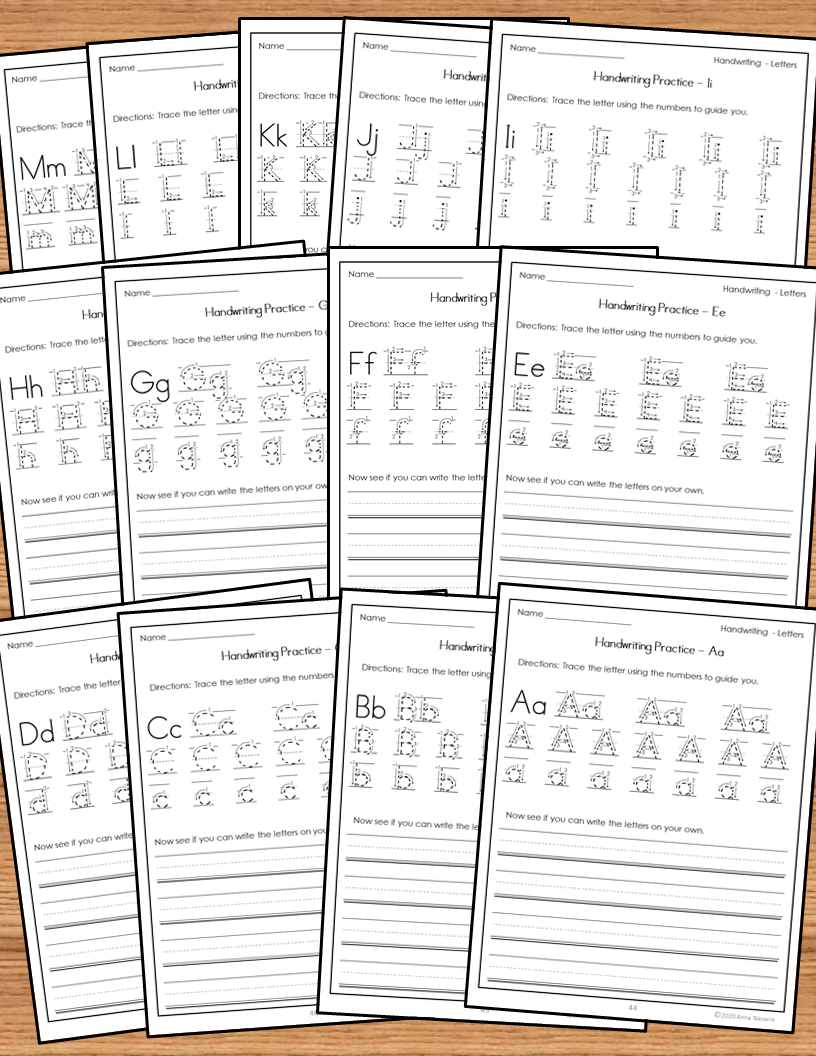
The packet includes 26 handwriting practice pages. Student practice neatly writing upper and lowercase letters. They first trace the letters using the arrows to help with letter formation. Then they write the letters on their own. 


There are 22 math practice pages. These pages include: numbers (counting and writing), more and fewer, ten frames, beginning addition and subtraction, patterns, and graphing.  

Here is a sample of some more of these pages. 


There are 9 pages that touch on science and social study concepts. They include energy, motion, plants and animals, weather, places in the community, national symbols, community helpers, school rules, and location.  


This packet is a useful resource for helping students practice basic skills. This product can be found on my TPT Store. Here is the link if you are interested in checking it out. 


Monday, February 22, 2021

Using Data to Tell How Many More or Less

 
Teaching students to use the data on a graph to compare numbers can be a little tricky, but I love it when they get it. There are a few main resources that I have used over the years. 

The first is to provide students with hands-on experience. I like to have students use manipulative and have them compare objects as we use the vocabulary question, "How many more__ are there than ___?" Having students line up in two lines and comparing the number of students in each line is fun too. 

I also like to use my Using Data to Tell How Many More or Less in a Category packet. It is a packet that provides students with a strategy for comparing and then has them answer questions about the data. I think this is important in building understanding. Students work to answer "How many more," "How many less," "Which has more," and "Which has fewer." They also need to write a sentence about something they have learned. 


You can see on this sample page that students use lines to match the objects and then circle the remainder. Then they use this information to answer the questions. 
 
You can click on the link below if you are interested in viewing this packet.


Another resource that I have used, which follows the same ideas as the worksheets, is a video that I have actually made available on YouTube. It is helpful for reviewing/teaching the idea of using the data on a graph to tell how many more or less/fewer. It is also a good way to review the vocabulary and what it means. 


I hope that you find these resources helpful. Please feel free to visit my TPT Store to see my other teaching resources. You can also follow my store to receive notifications of free and paid products.